
What Is Included in Office Cleaning? A Practical Checklist
Learn what is included in office cleaning, from daily washroom and kitchenette care to touchpoints, floors, glass, waste handling, and the add-ons that improve standards.
What Is Included in Office Cleaning? A Clear, Business-Ready Breakdown
Office cleaning looks simple until it goes wrong. One week the place feels fine, the next week the washrooms draw complaints, the kitchenette smells off, and meeting rooms look rushed.
Dust builds on desks, bins overflow, fingerprints sit on glass, and someone slips near the entrance on a wet day.
That is when people start asking the real question: what is included in office cleaning and what is not? In this guide, we break down the core tasks, how frequency works, what usually counts as an add-on, and how to lock in a clear scope that stays consistent.
What Is Included in Office Cleaning: The Parts That Actually Keep Standards High
Most office cleaning plans include the essentials that stop daily complaints: washrooms, kitchenettes, bins, and floors. A reliable service also targets touchpoints such as handles and switches, because those areas get used all day.
Meeting rooms and reception usually receive regular attention so the office stays visitor-ready. Many plans add light glass spot-cleaning, especially for internal partitions and entrance doors.
Periodic deep cleaning covers the jobs routine visits cannot fully solve, like carpet extraction, high dusting, and washroom detail work. The key is not the list alone. It is how clearly tasks and frequency are defined, then checked.
A Clear Office Cleaning Checklist for London Workplaces – Soluxe Cleaning Services
We clean offices across London, so if you’re local, we can build a clear checklist that matches your hours, headcount, and priorities. No vague promises, just a defined scope and standards that are easy to manage week to week. Ask for a scope checklist






Office Cleaning Isn’t One Task: It’s a System
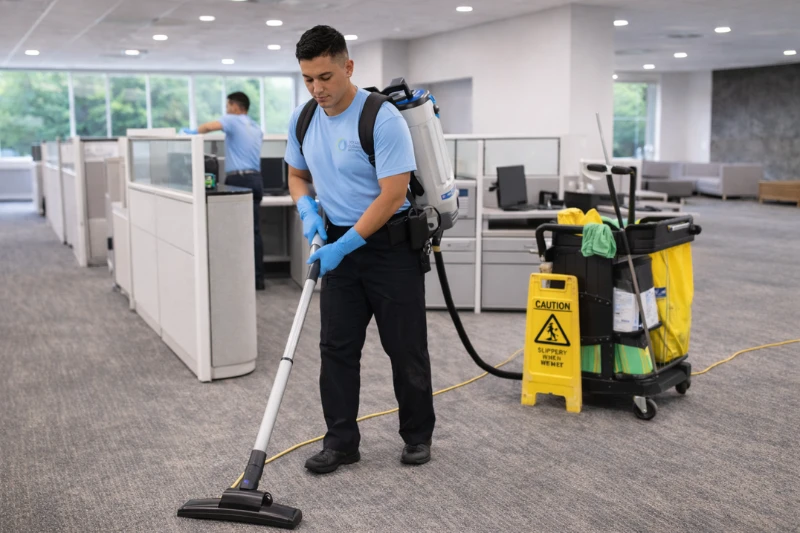
When businesses ask what office cleaning includes, they often expect one answer. In reality, office cleaning is a system made up of routine tasks and periodic resets. Routine work keeps the space hygienic and presentable week to week. Periodic work prevents slow build-up from dragging your standard down.
If your cleaning arrangement feels inconsistent, it is usually because the system is missing structure. That could mean unclear task lists, vague frequency, or no inspection process. Clarity fixes most issues faster than changing providers.
Daily Essentials, Weekly Tasks, and Periodic Deep Cleaning
Daily essentials focus on the areas that get used hardest. Washrooms, kitchenettes, bins, and entrances usually sit in this group. These are the spaces that trigger complaints quickly, so they benefit from frequent attention.
Weekly tasks go deeper on the same areas, plus broader office maintenance like more thorough dusting and extra detailing of shared spaces. Periodic deep cleaning sits above routine work and targets stubborn build-up, such as carpets that need extraction or hard floors that need a scrub and refresh.
What’s Typically Included vs What’s Usually an Add-On
What’s typically included depends on the level of service, but most office cleaning packages cover core communal areas, basic surface cleaning, floors, and waste. That is the foundation that keeps the office functional.
Add-ons usually involve time-intensive or specialist work. Carpet extraction, hard floor machine scrubs, high dusting at vents, interior window detailing, and washroom descaling are common examples. A good provider will not blur this line. They will define what is included, what is periodic, and what is extra.
Core Areas Covered in Offices
A business-grade office clean should cover the places people see and use most. That sounds obvious, but many problems hide in the gaps: the door handles nobody wipes, the kitchenette edges that stay greasy, or the meeting room glass that always looks smeared under daylight.
The sections below explain what most offices can reasonably expect when cleaning is set up properly. It also highlights where policies matter, especially around desks and sensitive spaces.
Desks and Workstations: How “Clear Desk” Changes Everything
Most office cleaning includes light cleaning around workstations, but the exact scope depends on your clear desk policy. Cleaners cannot safely move paperwork, devices, or personal items without agreement. That is why many offices set a rule: clear the surface at the end of the day so cleaners can wipe it properly.
When a clear desk approach exists, cleaners can wipe desk surfaces, remove visible dust, and keep the workspace looking tidy. Without it, cleaning often becomes “around the clutter,” which leaves staff feeling like desks never get properly cleaned.
Touchpoints: The Surfaces People Use All Day
Touchpoints include door handles, light switches, lift buttons, fridge handles, shared printers, and kitchen appliance controls. These are the areas that collect marks and grime quickly because they are used repeatedly.
A strong office cleaning plan includes touchpoints as a defined task, not a vague intention. When touchpoints are cleaned consistently, the office feels fresher and more cared for. It also reduces the spread of mess and stains that build up through constant contact.
Meeting Rooms and Reception: Where Your Standards Get Judged
Reception areas and meeting rooms shape first impressions. They also create internal confidence. A tidy, clean meeting room supports a better meeting experience, especially for client calls, interviews, and presentations.
Typical tasks include vacuuming or mopping floors, wiping tables (within policy), removing cups and visible marks, and keeping glass and entry areas presentable. When these rooms get missed, the whole office feels less professional, even if the rest is clean.
Washrooms: What Good Washroom Standards Look Like
Washrooms are non-negotiable. If they feel unpleasant, the office feels poorly managed. Basic washroom cleaning usually includes toilet bowls, seats, sinks, taps, mirrors, dispensers, and touchpoints. Floors get mopped, bins get emptied, and visible marks get removed.
Washroom standards also rely on restocking and detail work, depending on the scope. Many providers will restock consumables if you supply them. Periodic detail tasks, like descaling and grout work, may be scheduled separately, because they require more time and specialist method.
Kitchenette and Break Areas: Where Smells Start
Kitchenettes can undo the “clean office” feeling in one afternoon. Food spills, bin smells, and sticky counters create fast frustration. Routine cleaning often includes wiping counters, cleaning sinks, spot-cleaning appliance exteriors, and managing waste.
A realistic plan also defines what cleaners do not handle, such as dishes left in sinks or old food inside fridges. Clear boundaries prevent blame and keep standards consistent. When the scope is clear, the kitchenette stays usable rather than avoided.
Floors: Carpet vs Hard Floor Expectations
Floors often take the most wear and show the most neglect. Carpeted areas require thorough vacuuming and attention to edges. Hard floors need mopping with correct methods to prevent sticky residue and dull patches.
Routine cleaning covers maintenance, not restoration. Over time, carpets may need extraction and hard floors may need a scrub and refresh. A good provider will recommend periodic deep work based on footfall rather than waiting for floors to look “beyond saving.”
Glass and Internal Partitions: The Office Detail People Notice
Many offices have internal glass partitions, doors, and reception panels. These surfaces show fingerprints, smears, and dust quickly, especially under strong light.
Routine office cleaning often includes spot cleaning of obvious marks. Full internal glass detailing may be scheduled as a periodic task or add-on. The right choice depends on how client-facing your office is and how much glass you have.
Bins and Waste Handling: More Than Just Emptying
Waste handling is more than removing bags. Routine cleaning usually includes emptying bins, replacing liners, and ensuring waste areas do not smell or spill. Recycling can be included if the office has a clear system.
A well-run plan also addresses bin placement and frequency. Some offices need bins emptied daily in kitchenettes and washrooms, while desk bins may need less frequent service. This is where a clear scope prevents constant overflow issues.
Deep Cleaning and Periodic Services That Offices Often Need
Routine cleaning keeps things stable. Deep cleaning fixes what routine work cannot. Most offices benefit from periodic services because modern workplaces have heavy footfall, shared spaces, and surfaces that wear down with constant use.
Deep cleaning also protects the long-term look of the office. It prevents slow build-up from turning into permanent staining, odours, or tired presentation.
Carpet Deep Clean and Extraction: When It Makes Sense
Carpet extraction is useful when carpets look dull, hold odours, or show visible traffic lines. Routine vacuuming helps, but it cannot remove deeper dirt and residue. Extraction resets the carpet so maintenance becomes easier and the space feels fresher.
Frequency depends on footfall. Offices with heavy traffic, frequent visitors, or shared spaces often benefit from scheduled extraction. The aim is not perfection. It is to prevent carpets from looking permanently tired.
Hard Floor Scrub and Refresh: Restoring the Finish
Hard floors can develop sticky patches, dull film, and scuff marks over time. Mop-only routines can sometimes spread residue rather than remove it, especially if the wrong products are used.
A periodic scrub and refresh removes built-up grime and helps restore a cleaner look. It also supports safer surfaces in high-risk zones such as entrances, kitchenettes, and washrooms, without making unrealistic promises.
High Dusting: Vents, Ledges, and Overlooked Surfaces
High dusting targets the areas nobody sees until they do: ledges, tops of cabinets, vents, and high corners. Dust build-up can make an office feel stale and uncared for.
This task is often periodic because it takes time and requires safe access. When scheduled properly, it lifts the overall standard and reduces that “we missed something” feeling.
Washroom Descaling and Detail Work
Washrooms often need periodic detail work to address scale around taps, grout lines, and areas that collect build-up. Routine cleaning maintains hygiene and appearance, but descaling and edge work deliver a more complete reset.
If washrooms draw frequent complaints despite routine cleaning, detail work is usually the missing piece. It strengthens washroom standards and keeps the space feeling consistently fresh.
What Affects What’s Included in Your Office Cleaning Plan
Two offices can request “cleaning” and need completely different scopes. That is why vague arrangements lead to disappointment. A good plan matches the office reality: headcount, usage, access times, and site rules.
The best way to avoid conflict is to define tasks and frequency based on real use, then adjust as your office changes.
Headcount, Footfall, and Hot-Desking
More people means more touchpoints, more waste, and more washroom use. Hot-desking increases surface use because more people share the same spaces, which increases marks, dust, and the need for consistent routines.
A plan built for ten staff will fail in a 40-person office. The scope needs to match usage, not wishful thinking. When it does, cleaning feels stable instead of unpredictable.
Office Hours and Out-of-Hours Access
Cleaning schedules affect what can be done. If cleaning happens during business hours, tasks must avoid disruption and keep walkways safe. If cleaning happens after hours, cleaners may have more time to complete deeper work without people in the space.
Out-of-hours cleaning can be a strong option for busy offices, especially where reception and meeting rooms need to look sharp from the first minute of the day. Access rules and alarm procedures need to be clear, and trust is critical.
Compliance Needs and Site Rules
Some offices have rules around desks, confidential areas, and sensitive materials. These rules shape what cleaners can touch and what needs special handling. That is normal and manageable with the right communication.
Clear site rules should be part of the scope. When cleaners know the boundaries, the work stays consistent and trust stays intact.
Budget vs Standard Expectations
Budget matters, but clarity matters more. A lower budget can still produce good results if expectations are realistic and priority areas are defined. Problems start when businesses want premium standards on a basic scope.
If you want a higher standard, invest in the tasks that create visible outcomes: washrooms, kitchenettes, touchpoints, floors, and meeting rooms. Then add periodic deep services as needed.
How to Confirm the Scope Before You Hire
If you want consistent office cleaning, do not rely on verbal agreements or assumptions. Confirm scope in writing. Agree what gets cleaned, how often, what is excluded, and how quality will be checked.
This reduces awkward conversations later. It also helps you compare providers fairly, because you are comparing scope and standards, not vague promises.
Site Walk-Through and a Written Checklist
A site walk-through identifies priorities and problem areas fast. It also clarifies access and frequency. After that, a written checklist turns the plan into something measurable.
A checklist supports accountability. It also protects you from “we thought that was extra” conversations. For a long-term service, this is one of the simplest ways to keep standards stable.
Training, Vetting, and Insurance
Offices require trust. Cleaners often work around equipment, confidential materials, and shared spaces. Training helps ensure correct methods for surfaces and safe handling of tasks.
Vetting and insurance provide added reassurance. You are not looking for a perfect sales pitch. You are looking for professionalism and basic risk controls that match a business environment.
Quality Checks and Feedback Loop
Quality control separates good cleaning from inconsistent cleaning. Ask how quality checks happen and how feedback is handled. A simple inspection routine can prevent repeat issues.
A good feedback loop also keeps the service improving. If something gets missed, it gets fixed and the routine changes so it does not happen again. That is how standards stay reliable over time.
Communication, Cover, and Escalation
Cleaning consistency suffers when cover is weak or communication is poor. Ask how the provider handles holidays, sickness, and unexpected changes. A dependable service has a plan for this.
You should also know how to escalate issues. If washrooms are not up to standard, you need a quick fix, not a slow email chain. Clear contact points matter.
FAQs About Office Cleaning
Conclusion
Office cleaning is not one vague promise. It is a defined scope, a sensible schedule, and a way to keep washrooms, kitchenettes, floors, and shared spaces consistently presentable. Once you understand what is included, you can prevent missed tasks and stop reactive firefighting.
If you want a service that holds up week after week, confirm tasks in writing, agree frequency based on real usage, and choose a provider that runs quality checks. With the right structure, your office feels cleaner, calmer, and more professional without adding work to your team.